
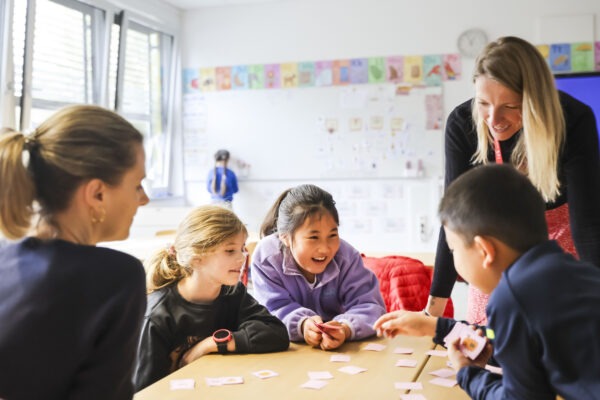
Most children settle in at their new school within four to twelve weeks after changing schools. How quickly this happens depends largely on the child’s age and personality and on how actively the new school supports their integration. The questions below explain what influences adjustment, how you can support your child, and which signs to watch for.
How Long Does It Really Take to Settle In at a New School?
For most children, settling in after a school change takes between four and twelve weeks. During this time, they learn the routines, rules, and social structures of their new school. Some children feel completely at home after a few weeks, while others need three to six months to feel that they truly belong.
It is important to distinguish between outward adjustment and inner well-being. A child may quickly find their way around, knowing the way to class and understanding the rules, but still need some time to form real friendships. The social side is the deciding factor for long-term well-being after a school change.
Parents should view the first three months as an orientation phase in which ups and downs are normal. Good days alternate with harder ones. This does not mean the school change was a mistake; it is a natural part of adjusting.
Which Factors Influence How Quickly a Child Adjusts?
Several factors determine how quickly a child adjusts after changing schools: the child’s age, personality, language skills, the reason for the change, and the quality of support from school and home. No single factor decides on its own; what matters is how all of these conditions work together.
How Do Age and Personality Affect Adjustment?
Younger children in elementary school often adjust faster than teenagers, because social groups in secondary school are often already established. Open, outgoing children have an advantage because they actively approach classmates. Introverted children simply need more time, and that is perfectly fine.
What Role Do Language and Academic Preparation Play?
When a child moves to an international school, the language of instruction plays a central role. Children who already have a good command of it can focus right away on content and friendships instead of spending energy on understanding the language. A structured start with an assessment of the child’s current level and placement in the right language level helps avoid academic overload from the beginning.
Does the Reason for Changing Schools Matter?
Children who change schools for positive reasons, such as a family move or a deliberate choice of a better educational offer, often start with a more positive attitude. Children who change because of conflicts or problems at school sometimes carry difficult experiences with them, which can slow down the settling-in process.
How Can You Tell If a Child Is Having Trouble Settling In?
Signs that a child is struggling after a school change include persistent refusal to go to school, sleep problems, mood swings, withdrawal from the family, or physical complaints without a medical cause. If these signs last for several weeks, parents should talk to the school.
It is important to distinguish temporary adjustment reactions from more serious difficulties. A stomachache on Sunday evening or mild reluctance on Monday morning is normal in the first few weeks. But if a child keeps complaining about loneliness, does not form friendships, or their grades drop noticeably, they need targeted support.
Parents should have short, open conversations regularly without pressuring their child. Questions such as “What was interesting today?” or “Who did you eat lunch with today?” are easier to answer than direct questions about how the child feels, and they often produce more revealing answers.
How Can Parents Actively Support Their Child’s Adjustment?
Parents can actively help their child settle in after changing schools by keeping stable routines, communicating openly, making it possible to meet classmates, and working closely with the school. Parents’ attitude directly affects how confidently a child approaches the new situation.
In concrete terms, it helps when parents:
- keep consistent bedtime and morning routines that provide security and structure
- make it possible for their child to meet classmates outside school, for example through playdates after class
- go through the school planner together every day to keep track of homework and deadlines
- encourage their child to try activities and clubs, since shared interests lead to friendships
- talk to teachers or the school leadership early when problems arise instead of waiting
Parents should also reflect on their own attitude. If parents show uncertainty or skepticism about the new school, the child picks up on it. A positive, curious attitude strengthens the child’s trust in the new environment.
What Do Schools Do to Integrate New Students?
Good schools actively support a school change with structured admissions processes, buddy programs, individual placement, and close guidance from educational staff. The quality of these measures largely determines how quickly a child feels they belong after the change.
Proven measures include:
- an orientation session in which new students get to know the school routines, rules, and campus
- a buddy system in which experienced students guide newcomers through everyday school life and help with questions
- an individual assessment of the child’s current level to make sure they are neither overwhelmed nor under-challenged in class
- regular feedback to parents so that any difficulties are recognized early
- counseling by educational professionals who support both children and families
What matters most is that schools provide social and emotional support, not just academic support. A child who feels welcome and seen learns better and settles in faster.
How Can Families See Everyday School Life at ISR?
Families who want to experience ISR International School on the Rhine in person can find information about the campus, the school program, and individual tours at the ISR Info Days.
When Is the Best Time to Change Schools?
The best time to change schools is usually the start of a new school year, because all students are going through a similar orientation process and social groups are not yet fully established. A change at the start of a new school stage, such as the move from elementary to secondary school, also offers good conditions.
A change in the middle of the school year is possible and actively supported by many schools, but it requires more preparation. The child joins a class in which friendships and groups already exist, which can make social integration a little harder. Academically, a mid-year start can be managed well with targeted placement and support.
If a change is unavoidable for family reasons, parents should plan it for the start of a trimester or semester if possible. This gives the child a clearly structured starting point instead of joining in the middle of ongoing units or exam periods.
How Does ISR International School on the Rhine Support Children Who Change Schools?
We know that changing schools is a big change for children and families. That is why ISR International School on the Rhine in Neuss, near Düsseldorf, Germany, has developed an admissions process that actively includes new students in our international school community from day one and makes their start as easy as possible.
What you can expect from us:
- A structured start: new children take part in an orientation session in which they get to know the school routines, rules, and our campus before regular lessons begin.
- Buddy and ambassador program: on their first day, new students are accompanied by classmates who show them around the school and translate if needed.
- Individual placement: an assessment of each child’s current level ensures they are placed at the right level in English and German classes, neither overwhelmed nor under-challenged.
- Support from specialist staff: our academic leaders and well-being counselors support new students and their families individually when extra help is needed.
- Transparent communication: through our ISR app and regular newsletters, parents are always informed and can take an active part in school life.
- Academic support: for children who need extra help in certain subjects, we offer small groups and peer tutoring by older students.
Whether your child is moving into elementary or secondary school, our ISR Elementary School and our secondary school offer a warm, supportive environment in which new students quickly feel welcome. If you would like to learn more about how we can make your child’s start easier, we warmly invite you to visit the ISR Secondary School on our campus in Neuss and get to know our school community in person.

