Yes, a German child can attend an international school without speaking English, and this is actually quite normal. Younger children in particular learn languages astonishingly quickly by being immersed in everyday life. International schools are used to admitting children with different language skills and have developed specific structures for this purpose.
Many German-speaking parents still wonder whether their child can keep up. The questions below explain how integration, admission, and German lessons work.
How Are Children Without English Skills Integrated Into Lessons?
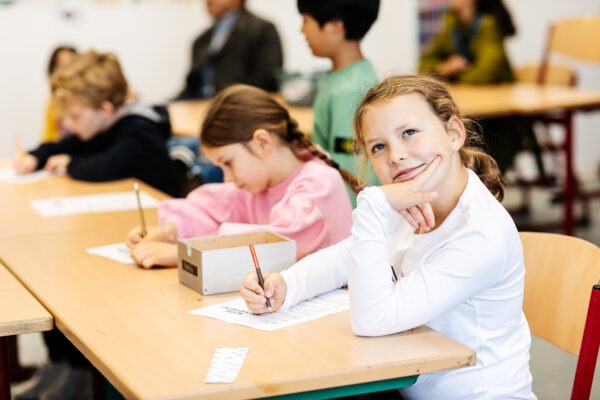
International schools are not elite institutions that only admit children who speak perfect English. Everyday reality looks different: a typical class includes children from many different countries who all started at different language levels. This creates a natural learning environment in which language is not explained but lived.
Children learn English fastest through real communication with their peers. When a child plays with other children, works on assignments, and takes part in lessons every day, language skills often develop faster than expected.
Teachers at international schools are trained to support students with different language backgrounds and to design lessons so that everyone can follow along. Many schools also offer targeted language support, for example through additional English lessons or individual support during the settling-in phase.
At What Age Is It Easiest to Start Without English Skills?
The younger a child is, the easier it is for them to learn a new language. This is not theory, but something that is seen again and again in practice. Children of kindergarten age soak up languages like sponges because they are not yet afraid of making mistakes: they play, listen, imitate, and simply start talking.
Starting in kindergarten or elementary school is therefore particularly straightforward, and children of this age do not need any prior knowledge to settle in quickly. Joining in middle or upper school is also possible, but it requires more preparation and support. If you would like to enroll an older child, talk openly with the school in advance to work out the best plan together for a successful start.
Will My Child Fall Behind Without English?
Many parents worry about whether their child will fall behind if they have not yet mastered the language of instruction. This concern is understandable, but mostly unfounded. Children are social beings; they find ways to communicate long before they speak a language fluently.
Will My Child’s German Suffer or Will They Be Socially Excluded?
Another common fear is that their German will suffer. This usually does not happen, as long as parents continue to communicate in German at home and the school offers German as a regular subject.
Some parents also wonder whether their child will be socially excluded. Experience shows the opposite: in an international school community where many children have gone through a change of language or culture themselves, mutual understanding is the rule rather than the exception.
What really helps is an open attitude and a willingness to give your child time. Language acquisition is not a sprint, but a process, and experience shows that children at international schools manage this process very well.
What Role Does German Play at an International School?
German does not simply disappear from the curriculum at an international school. On the contrary: at many international schools in Germany, German is a required subject that is taught regularly and in a structured way. This means that German-speaking children continue to develop their native language while learning English at the same time.
This is particularly relevant for families who want to stay in Germany long term or whose children want to study at a German university later on. The International Baccalaureate (IB) Diploma, which many international schools offer, is recognized by the Standing Conference of the Ministers of Education (KMK) and can, under certain conditions, lead to the German general university entrance qualification (Allgemeine Hochschulreife).
If you are interested in the IB in Germany, review the KMK requirements carefully, as they define specific criteria for course selection and point scores. German therefore remains an active part of school life, not just as a reminder of the home language, but as a fully fledged subject with clear academic goals.
How Does Admission Work for German-Speaking Children Without English?
The admissions process at an international school is usually less complicated than many parents expect. Typically, everything starts with an introductory meeting in which the school learns more about the child and their educational background so far. For younger children, English skills do not play a decisive role.
For children from grade 3 onward, there is often a knowledge test that assesses their current level of learning in various subjects. This test is not meant to exclude children, but to find the right class and, if necessary, additional support. School records from the last two years are also helpful so that the school gets a complete picture.
Parents should openly mention in the meeting that their child speaks little or no English. A good international school will not see this as an obstacle, but as a starting point from which they can work together with the child.
How Does ISR International School on the Rhine Support Families Getting Started?
The transition to an international school raises many questions, especially when English is not yet a regular part of a child’s everyday life. At ISR International School on the Rhine in Neuss, near Düsseldorf, Germany, we support families in exactly this situation and know what really matters during the settling-in phase.
- Individual language support: Children with little or no English receive targeted support through structured language assistance in class and during the settling-in phase.
- German as a regular subject: The German language remains an integral part of the curriculum, so children continue to develop their native language in parallel.
- Recognized qualifications: We offer the IB Diploma Programme at ISR, which is recognized by the KMK and, under certain conditions, leads to the German university entrance qualification.
- Personal advice in German: Our admissions team is available to families in German and answers all questions about the admissions process.
- International community: In our diverse school community, children who have experienced language or cultural transitions themselves are not the exception, and mutual understanding is a given here.
If you would like to learn more about how your child can get off to a good start with us, we look forward to hearing from you. Feel free to get in touch or attend one of the ISR Info Days; we will take the time to find the right path together with you.

